
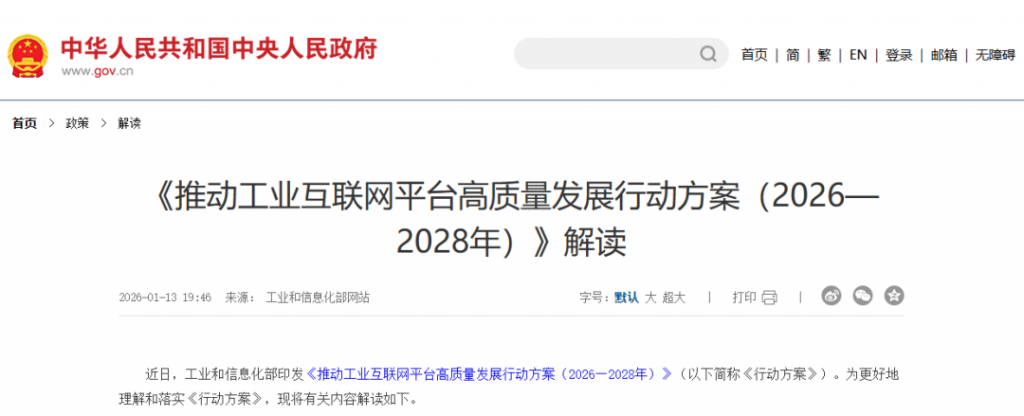
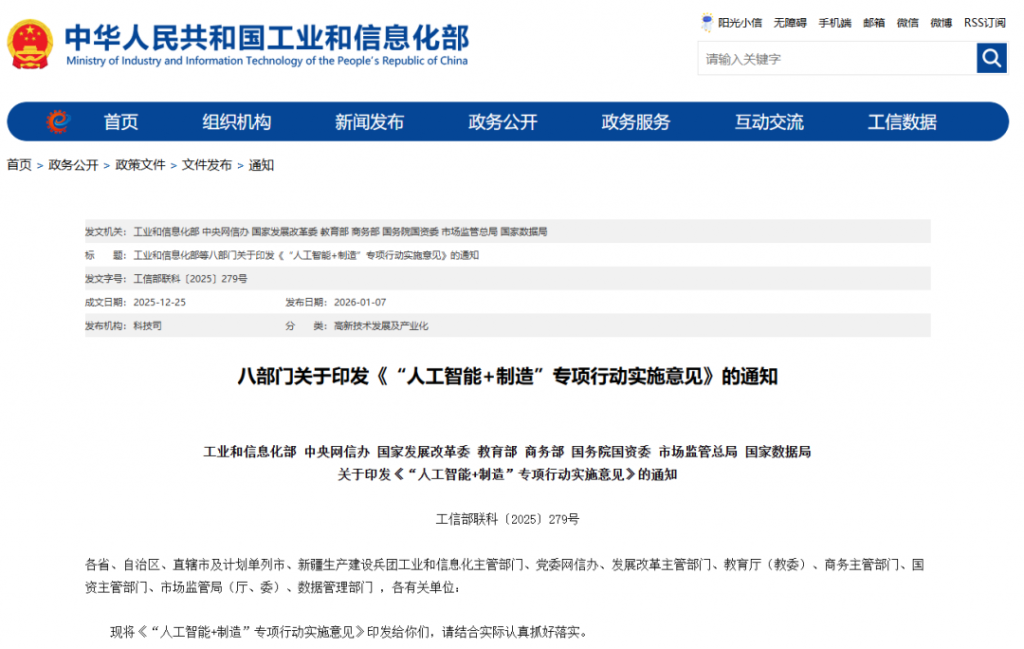
At the beginning of 2026, China’s Ministry of Industry and Information Technology (MIIT) successively released the “Action Plan for Promoting the High-Quality Development of Industrial Internet Platforms (2026–2028)” and the “Implementation Opinions on the Special Action for ‘AI + Manufacturing’.” These documents send a clear signal: the Industrial Internet is shifting from “connection” to “intelligence.” The state will focus on cultivating “industry-specific platforms” deeply embedded in industrial processes and accelerate the deployment and application of “industrial intelligent agents.”
This is not only a bellwether for industry development but also the best footnote for In-Road’s years of deep cultivation on the front lines of the chemical industry, persistently taking the “difficult but right path.”Under the wave of intelligent transformation, how does In-Road serve as a “value co-creator” for chemical enterprises? Our answer lies in our extreme understanding of chemical business scenarios and in every instance of deeply refining solutions for business pain points.
The Call of the Times: Building a Truly “Industry-Savvy” Platform
The new MIIT policies explicitly call for a focus on cultivating “industry-specific platforms” that “deeply embed into industry processes, workflows, and organizational systems.” This aligns perfectly with In-Road’s unwavering positioning. We are acutely aware that the chemical industry has high barriers to entry, significant risks, and complex processes. While general-purpose large AI models are powerful, without reverence for and understanding of chemical scenarios, they often fail to adapt. True industrial intelligence is not about showcasing technical prowess but about solving the concrete, thorny problems in chemical plants: How to make work permit approvals more rigorous? How to make hazard identification more professional? We don’t compete on the parameter count of general algorithms; we compete on the depth of understanding of chemical business workflows.
Our Core Barrier: Business Integration + Solidification of Expert Experience
In the strategic thinking behind “In-Road + AI,” we believe the true barrier lies not in piling up technologies, but in “deep business integration” and the “digitalization of industry experience.” Over the past years, we have rejected creating “surface-level projects.” Instead, we have been rooted on the front lines, ensuring our systems truly integrate into the daily operations of team leaders, safety officers, and engineers. It is this deep business integration that has allowed us to accumulate unique industry insights:
・Deep Embedding of Business Logic: Our systems are not simple recording tools but carriers of chemical production management logic. We embed national regulations and industry standards into the workflows, ensuring every click complies with regulatory requirements.
・Making Tacit Knowledge Explicit: The chemical industry relies heavily on the “experience” of senior experts and veteran staff. In-Road is committed to transforming this “tacit knowledge” (such as intuitive judgment on hazards, logic for risk anticipation) into “digital models.”
We are not mere data movers; we are translators of industry best practices. Through “model-data resonance,” we distill dispersed industry experience into standardized intelligent models, providing expert-level intelligent assistance for every safety management action.
Evolution Path: From “Functional Tool” to “Digital Specialist”
Responding to the national call for constructing a new “Platform + Intelligent Agent (Agent)” architecture, In-Road is driving the upgrade of our product form. We are building interactive, decision-supporting “Chemical Digital Specialists,” transforming software from “passive recording” to “active assistance”:
・Smarter Assistants (Intelligent Agents): For example, in “hazard rectification assistance” scenarios, the system can not only identify problems but also proactively recommend rectification bases and measures based on the industry knowledge base, just like a seasoned expert, assisting on-site personnel in making more accurate judgments.
・More Efficient Collaboration: We are exploring a “multi-agent collaboration” model. When the “Contractor Management Specialist” identifies qualification risks, it can trigger real-time alerts with the “Work Permit Specialist” for interception, achieving a leap from “human defense” to “technical defense” and solidifying the safety barrier.
Looking Ahead: Venturing into the Deep Waters of “Processes and Equipment”
Policy guidance points to the future of the petrochemical and chemical industry lying in “production safety monitoring and early warning, predictive maintenance of equipment, and adaptive optimization of process flows.”
In-Road’s focus remains locked on creating core value for customers. We will adopt a strategy of “pragmatic evolution”:
・Short-term: Concentrate on refining intelligent applications for high-frequency scenarios such as work permits and hazard management, making safety management easier and more compliant.
・Mid-to-Long-term: Leveraging the actual equipment records and maintenance logs accumulated by enterprises, we will use intelligent means to assist in formulating equipment maintenance strategies and fault analysis. This helps enterprises extract the “golden rules” of equipment management from vast amounts of operational data, filling the gap in experience inheritance.
There are no shortcuts in the Industrial Internet. In-Road will continue to adhere to accumulating “real experience” through “real business” and creating “real value” with “real intelligence.”
We promise to always uphold the bottom line of data security, protecting enterprise data assets with technological means that ensure data is “usable but invisible.” We are willing to join hands with all chemical enterprises to jointly push open the door to the era of intelligent decision-making and become your most trustworthy “industrial value co-creator.”