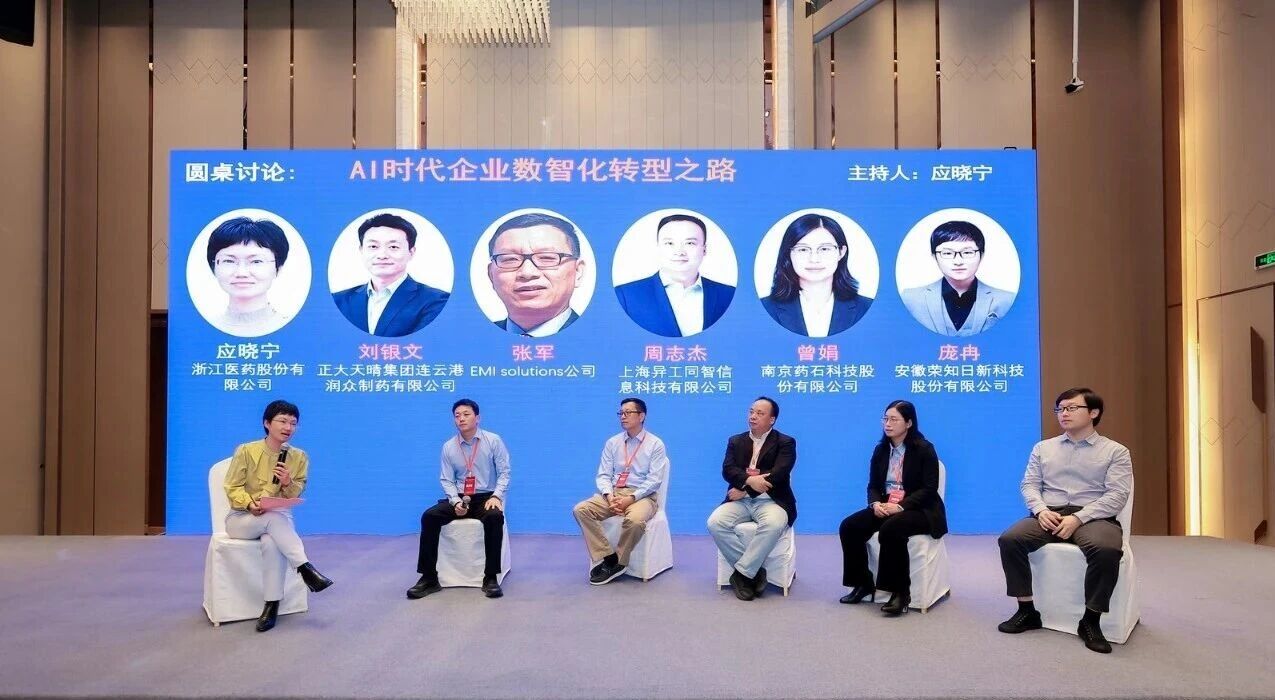

On November 11–12, the 2026 Pharmaceutical Industry EHS Management Annual Conference was held in Suzhou. This marks the tenth consecutive year that the China Pharmaceutical Enterprises Management Association has held the annual conference, with the theme “EHS Management Creates Value.” On the afternoon of November 11, at the special forum “AI Empowering EHS Management,” Dr. Zhou Zhijie, Founder and CEO of Yigong Tongzhi, delivered a presentation titled “AI Empowering Safety: Intelligent Transformation and Practice of Safety Management in Pharmaceutical Enterprises.” Model parameters are not the focus; what truly holds back frontline operations are those specific, almost trivial matters.

Safety is difficult at the “chain” level, not at the “point” level.
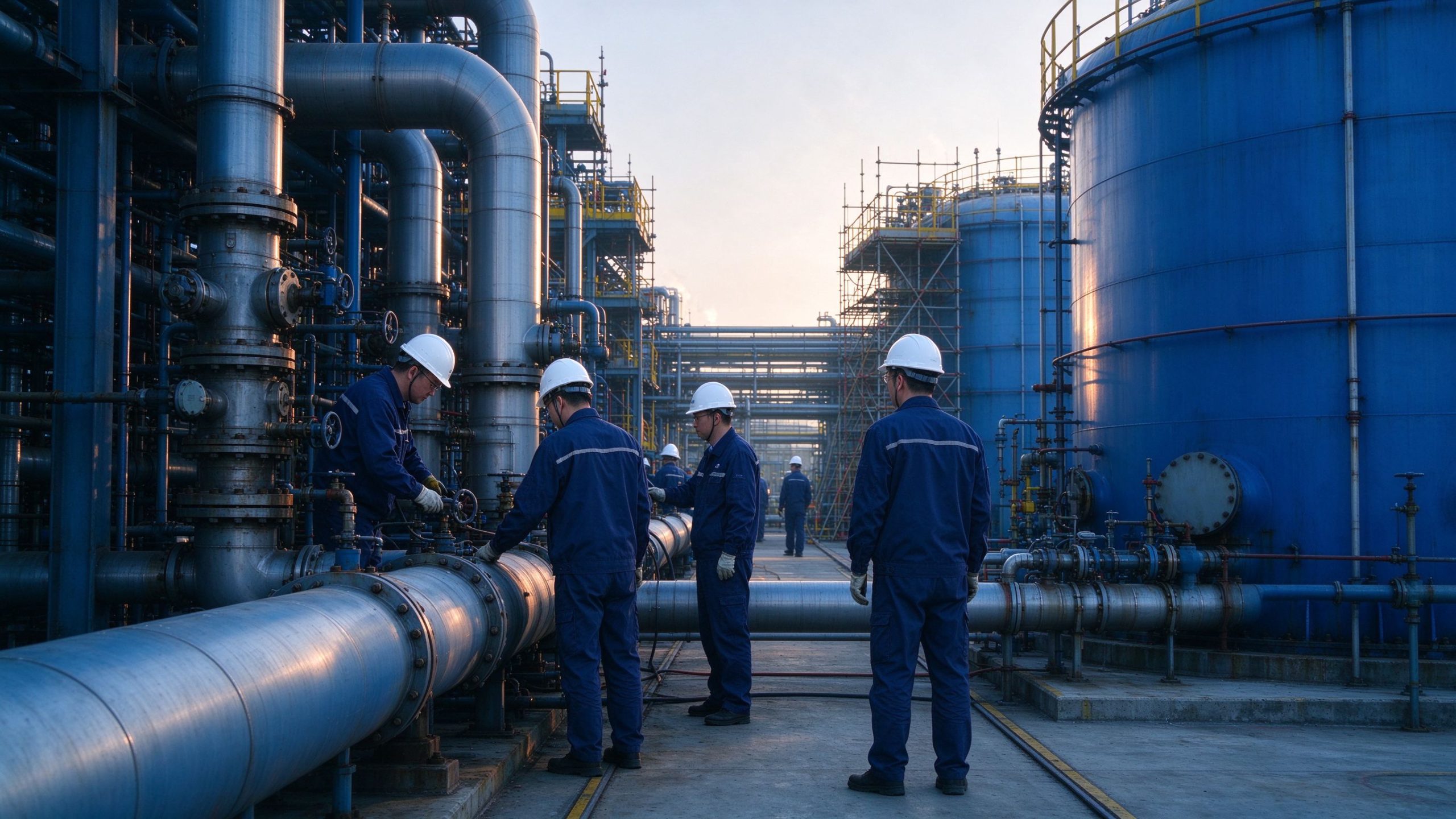
Risks in pharmaceuticals and chemicals rarely occur in isolation. A deviation in charging, temperature control, or containment conditions will amplify level by level along several chains—process, equipment, personnel, operations, and organization: heat accumulation triggers decomposition and overpressure, failure of protective layers amplifies consequences, personnel exposure combined with misoperation distorts the response, and a break in the responsibility chain allows similar hidden dangers to recur.
On-site behavior is only one link in the risk chain. More common than single-point errors are breakpoints in the management chain.
Risk lists are not assigned to specific equipment, areas, and positions; the isolation, detection, and supervision conditions set when the work permit is issued have already changed by the time they reach the site; maintenance work orders only state “repaired” and do not record the cause of failure; hidden dangers go through the closure process, but no one verifies the rectification effect. These breakpoints mostly occur at the interfaces between disciplines, systems, and positions.
Only when a closed loop exists first can AI have context.

Factories are not short of data; what they lack is data that can reconstruct an event.
Many enterprises are not short of data: DCS, video, work permits, maintenance records—nothing is missing. But once a review is conducted, they still cannot answer one question—which operation, which piece of equipment, which material, and in which risk unit did the deviation occur?
The approach proposed by Gongzhidao consists of three “samenesses”:
-
the same timeline, aligning processes, batches, maintenance, and work permits;
-
the same asset code, linking equipment, areas, materials, and personnel;
-
the same risk semantics, unifying events, measures, hidden dangers, and outcomes.
Only when data is aligned to this extent can event reconstruction even be discussed. The change brought by AI is not “one more tool,” but a forward shift in decision timing—from result recording to anomaly identification, and then to predictive prevention. The timing has moved earlier, but the responsible party remains unchanged.
No single model is suited to all safety problems.
Ask about the problem structure first, then about the model.
When faced with “which large model should be used,” the report looks at the problem structure first, then chooses the technology. For cases with clear limits, use rules and statistics; for multivariate weak signals, use anomaly detection; for PPE and boundary violations, use visual recognition; for procedure retrieval, use knowledge graphs plus RAG; for reactions and utilities, use mechanistic models plus data; for evacuation and training simulations, use digital twins.
Three lines, assigned to the agent.
The boundaries are also drawn very clearly. AI can help detect weak signals, correlate evidence across systems, prioritize reviews and maintenance, and retrieve controlled procedures. But HAZOP and LOPA, SIS and ESD and pressure relief protection, isolation and ventilation and PPE, authorization approval and emergency command—these bottom lines cannot be handed over. “The closer to high-consequence decisions, the more automation authority must be narrowed.” Three lines follow: it cannot approve high-risk operations, cannot write into the control network, and cannot expand permissions on its own. Supporting these are whitelists, read/write separation, external authorization, and full-process logs.

Choose scenarios that can change on-site actions first.
Four criteria screen out the starting scenarios. Not all scenarios are worth doing first. There are four screening criteria: clear consequences, data readiness, ability to intervene, and ease of verification. Applying these four criteria, special operations, critical equipment, area visual monitoring, and controlled knowledge agents are more suitable as starting scenarios.
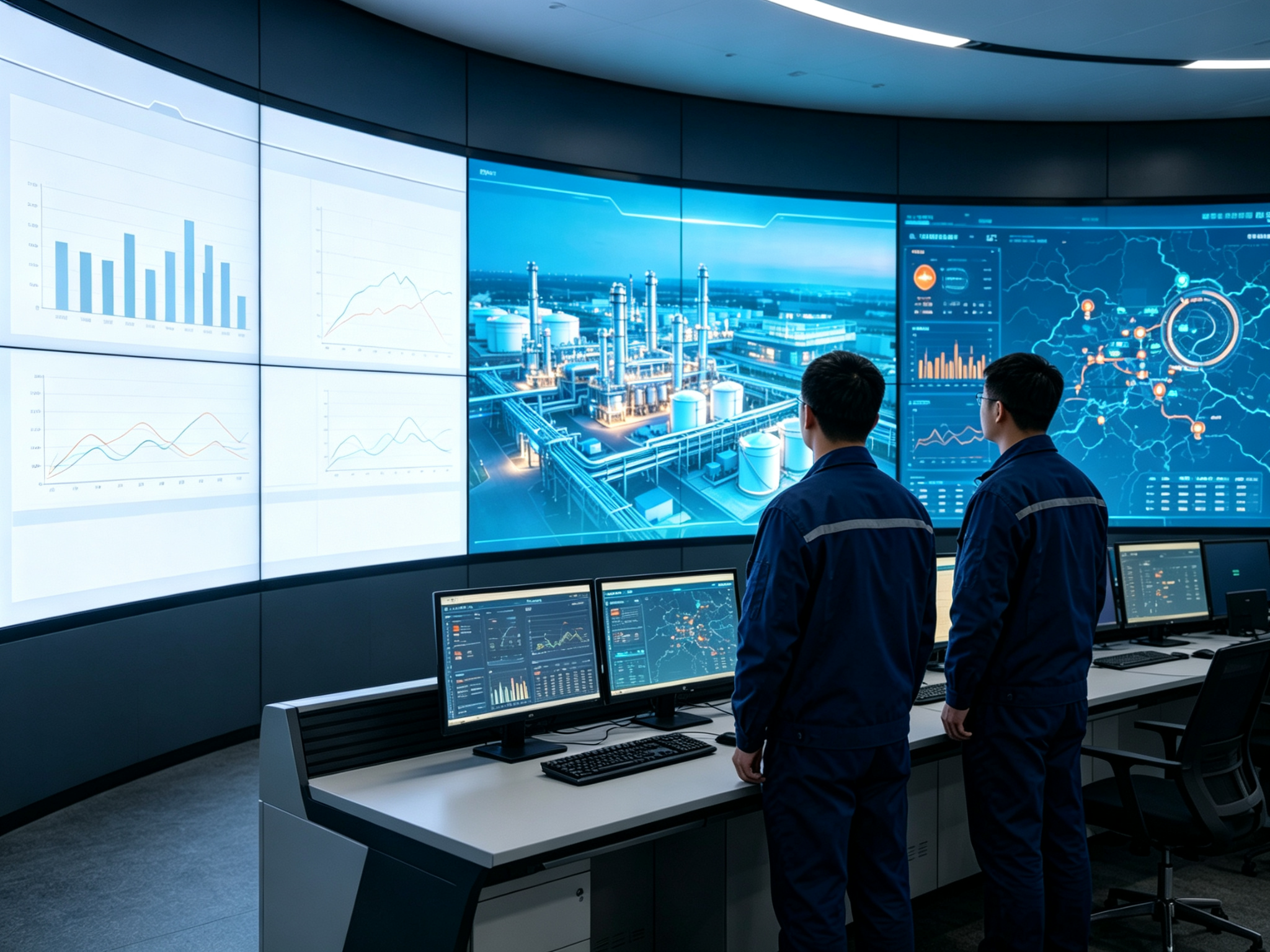
Start with operations and extend to equipment and knowledge. Taking operations as an example, Gongzhidao embeds AI into existing processes rather than building a separate system. JSA/HIRA completes steps, risks, and control measures before permit issuance; work permit inspection shifts from expert spot checks to full-sample inspection of every permit; and intelligent work supervision integrates video and gas data onto a single screen to support remote alarms and two-way intercom.

Videos and alarms from multiple work sites are centralized on a single screen.
This is not something the EHS department can accomplish on its own.
The rollout path is divided into three levels: low-risk efficiency assistance goes through whitelisting plus human review; medium-risk on-site reminders go through grouped testing plus shadow operation; high-risk decision support goes through mechanistic constraints plus independent verification. Autonomous interlocking and automatic approval must either be designated as no-go zones or re-justified. If the use changes, the classification must be redone. This also determines that it is not a one-time procurement.
EHS is responsible for defining risks and closed loops; process and equipment teams judge mechanisms and actionable actions; IT/OT manages architecture and auditing; quality ensures GMP cross-compliance; the frontline participates in design and acceptance; and procurement and management retain audit and exit rights. “Make AI a verifiable, replaceable, and exitable part of the safety management system.” This is the boundary Gongzhidao holds when building products: models can iterate, but independent protection must not be weakened.
The real starting point is not choosing a model, but beginning with the next on-site review.